Using the Whole Animal Weekend Course with Dr. Theresa Emmerich Kamper
Brand new for 2026
For much of human history, hunting came with real cost and real risk. Using short-range weapons and operating within fragile environments, our ancestors could not afford waste. Every animal taken represented an extraordinary concentration of resources—food, clothing, tools, containers, fibres, adhesives, and light—each part holding value, purpose, and potential.
In contrast, modern food systems present us with only a narrow fragment of this picture. Supermarket shelves conceal the complexity, skill, and responsibility once embedded in the act of taking an animal’s life.
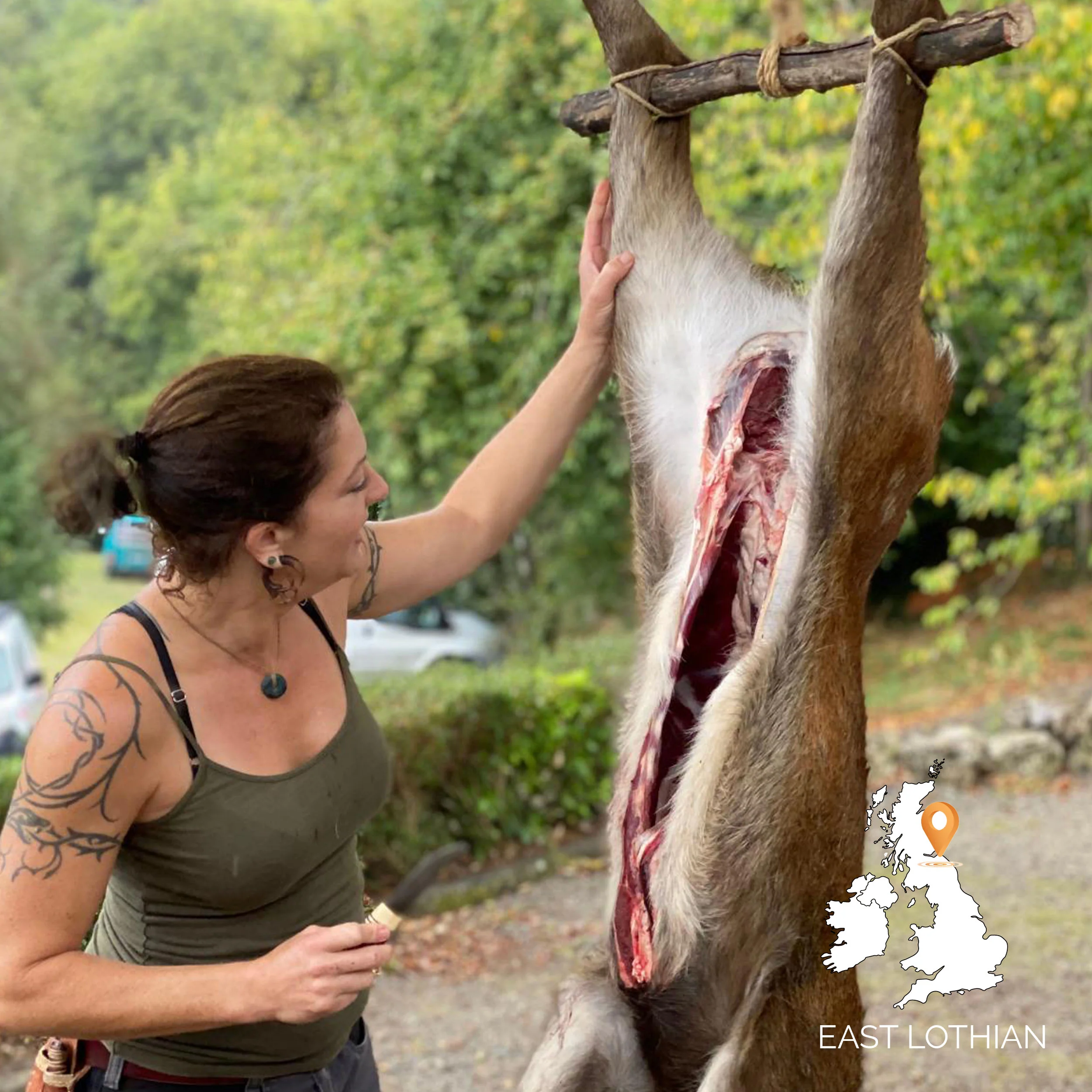
The Using the Whole Animal Weekend Course invites participants to step back into that older, more complete relationship. Under the guidance of Dr. Theresa Emmerich Kamper, you will explore how animals can be used respectfully and intelligently in their entirety—honouring the life taken by ensuring that as little as possible is wasted.
Brand new for 2026
For much of human history, hunting came with real cost and real risk. Using short-range weapons and operating within fragile environments, our ancestors could not afford waste. Every animal taken represented an extraordinary concentration of resources—food, clothing, tools, containers, fibres, adhesives, and light—each part holding value, purpose, and potential.
In contrast, modern food systems present us with only a narrow fragment of this picture. Supermarket shelves conceal the complexity, skill, and responsibility once embedded in the act of taking an animal’s life.
The Using the Whole Animal Weekend Course invites participants to step back into that older, more complete relationship. Under the guidance of Dr. Theresa Emmerich Kamper, you will explore how animals can be used respectfully and intelligently in their entirety—honouring the life taken by ensuring that as little as possible is wasted.
Description
Brand new for 2026
For much of human history, hunting came with real cost and real risk. Using short-range weapons and operating within fragile environments, our ancestors could not afford waste. Every animal taken represented an extraordinary concentration of resources—food, clothing, tools, containers, fibres, adhesives, and light—each part holding value, purpose, and potential.
In contrast, modern food systems present us with only a narrow fragment of this picture. Supermarket shelves conceal the complexity, skill, and responsibility once embedded in the act of taking an animal’s life.
The Using the Whole Animal Weekend Course invites participants to step back into that older, more complete relationship. Under the guidance of Dr. Theresa Emmerich Kamper, you will explore how animals can be used respectfully and intelligently in their entirety—honouring the life taken by ensuring that as little as possible is wasted.